


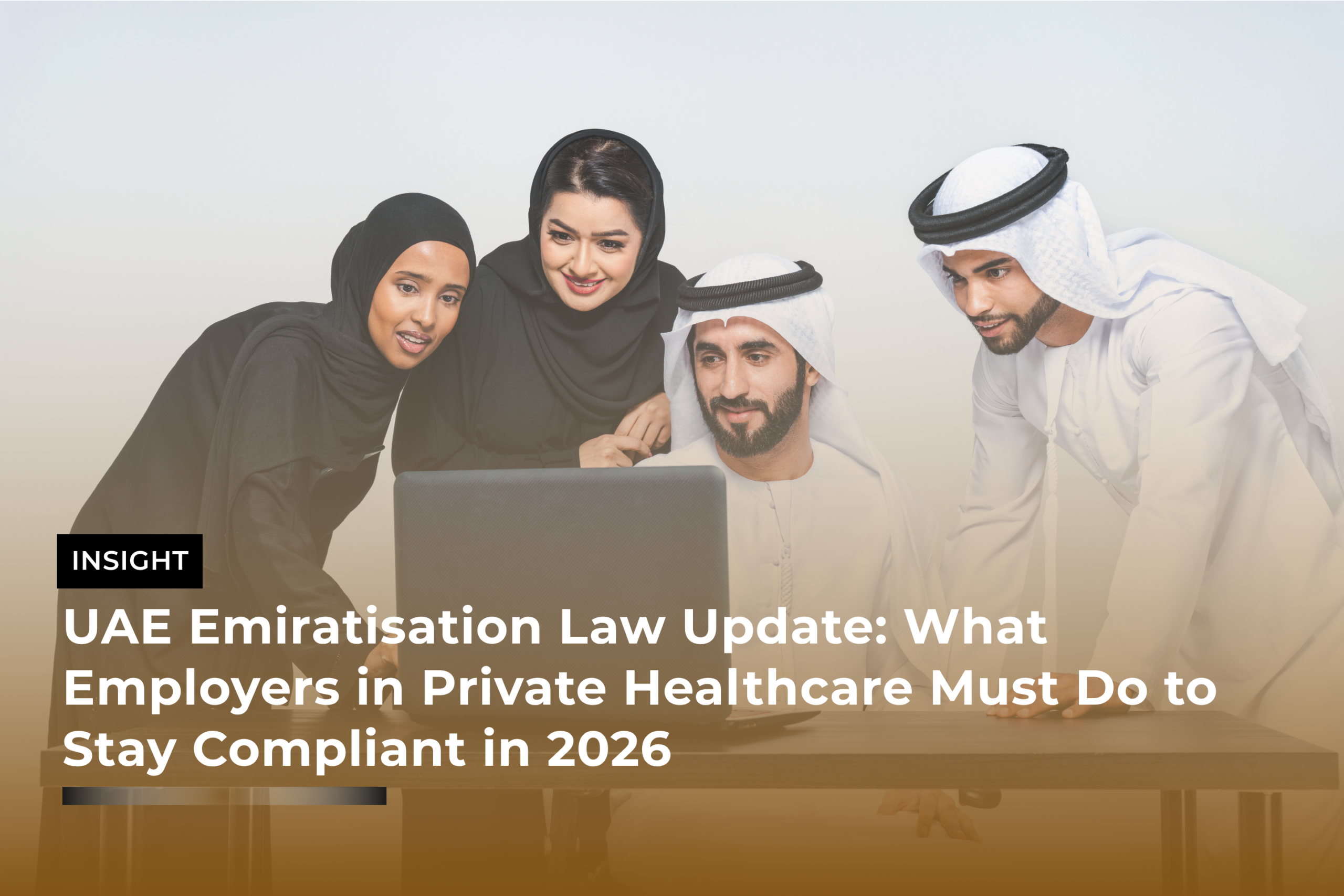
The UAE continues to strengthen its Emiratisation strategy by expanding workforce nationalisation across key industries. In 2026, the private healthcare sector is under increased regulatory scrutiny, with employers expected to meet specific Emiratisation obligations while maintaining high standards of patient care and operational efficiency.
For hospitals, medical centres, clinics, diagnostic laboratories, pharmacies, and other healthcare providers, compliance is no longer simply a regulatory requirement—it has become a critical aspect of workforce planning and corporate governance.
This guide explains what private healthcare employers need to know about the latest Emiratisation requirements, compliance obligations, potential penalties, and practical strategies for meeting government expectations.
Understanding the 2026 Emiratisation Requirements
Emiratisation is a national initiative designed to increase the participation of UAE Nationals in the private sector by encouraging employers to recruit, train, and retain Emirati talent.
In 2026, enforcement has become more robust, with authorities closely monitoring employer compliance through digital systems, inspections, and workforce reporting.
Healthcare employers are expected to implement sustainable recruitment strategies rather than relying on last-minute hiring to satisfy regulatory requirements.
Which Private Healthcare Establishments Are Covered?
The Emiratisation requirements apply to many private healthcare businesses operating across the UAE, including:
- Hospitals
- Medical clinics
- Dental centres
- Diagnostic laboratories
- Day surgery centres
- Rehabilitation facilities
- Medical imaging centres
- Healthcare groups
- Specialty medical practices
The exact obligations depend on the size of the workforce, business activity, and applicable regulatory requirements.
Key Emiratisation Obligations for Healthcare Employers
Meet the Required Emiratisation Targets
Private healthcare employers must ensure they achieve the applicable Emiratisation targets established by the relevant authorities.
Businesses should regularly assess workforce composition to determine whether additional Emirati recruitment is required.
Register and Maintain Compliance with MOHRE
Employers should ensure that employment records, workforce information, and regulatory filings remain accurate and up to date.
Maintaining proper documentation helps demonstrate compliance during inspections or audits.
Ensure Genuine Employment of UAE Nationals
Authorities continue to monitor for non-genuine employment arrangements.
Healthcare employers should ensure that Emirati employees:
- Hold legitimate job positions
- Perform actual work duties
- Receive salaries and benefits in accordance with applicable regulations
- Are integrated into the organisation’s workforce
Non-compliance may result in investigations and enforcement action.
Maintain Accurate Employment Records
Businesses should maintain comprehensive records relating to:
- Employment contracts
- Payroll records
- Job descriptions
- Attendance records
- Training programmes
- Performance evaluations
Proper documentation can support compliance and reduce legal risks.
Penalties for Non-Compliance
Healthcare employers that fail to meet Emiratisation obligations may face consequences such as:
- Administrative financial penalties
- Increased regulatory scrutiny
- Restrictions on government-related services
- Delays in processing employment-related applications
- Reputational damage
Authorities continue to strengthen enforcement measures, making proactive compliance increasingly important.
How Private Healthcare Companies Can Achieve Compliance
Workforce Planning
Develop long-term recruitment strategies that incorporate Emiratisation objectives into overall workforce planning rather than treating compliance as a short-term requirement.
Partner with Recruitment Specialists
Working with experienced recruitment consultants can help healthcare organisations identify qualified Emirati professionals across clinical, administrative, technical, and management positions.
Specialist recruitment partners can also assist with:
- Candidate sourcing
- Screening and assessment
- Interview coordination
- Onboarding support
- Workforce planning
Invest in Training and Career Development
Successful Emiratisation extends beyond recruitment.
Healthcare organisations should provide:
- Structured onboarding programmes
- Professional development opportunities
- Clinical and leadership training
- Career progression pathways
- Mentorship programmes
Long-term retention is often just as important as initial hiring.
Conduct Regular Compliance Reviews
Internal audits help identify potential compliance gaps before they become regulatory issues.
Regular reviews should examine:
- Workforce demographics
- Employment documentation
- Recruitment practices
- Reporting obligations
- Internal HR policies
Common Compliance Mistakes to Avoid
Healthcare employers frequently encounter compliance challenges such as:
- Waiting until compliance deadlines approach
- Relying on temporary hiring solutions
- Maintaining incomplete employee records
- Failing to develop retention strategies
- Misunderstanding regulatory requirements
- Neglecting workforce planning
Addressing these issues early can significantly reduce compliance risks.
Why Legal and HR Guidance Matters
Emiratisation compliance involves employment law, regulatory requirements, HR policies, and workforce planning.
Professional legal and HR support can help organisations:
- Understand changing regulations
- Develop compliant recruitment strategies
- Review employment documentation
- Prepare for inspections
- Reduce the risk of penalties
At Precedential Law, we assist healthcare organisations with employment law compliance, HR advisory services, regulatory guidance, and workforce-related legal matters, helping businesses meet their Emiratisation obligations while supporting long-term operational success.
Practical Tips for Healthcare Employers
To remain compliant in 2026:
- Review your current workforce composition regularly.
- Develop a structured Emiratisation recruitment plan.
- Focus on retaining Emirati employees through career development.
- Maintain accurate employment and payroll records.
- Monitor regulatory updates and compliance deadlines.
- Seek professional legal and HR advice before compliance issues arise.
Taking a proactive approach is significantly more effective than responding after enforcement action has begun.
Conclusion
Emiratisation continues to reshape workforce planning across the UAE, with the private healthcare sector playing a key role in achieving national employment objectives. As enforcement becomes stricter in 2026, employers must move beyond reactive hiring and adopt sustainable recruitment, training, and retention strategies.
By understanding regulatory requirements, maintaining proper documentation, and investing in long-term workforce development, healthcare providers can achieve compliance while strengthening their organisations.
Precedential Law provides comprehensive legal and employment advisory services to healthcare businesses across the UAE, helping employers navigate Emiratisation requirements, minimise compliance risks, and build future-ready workforces.