

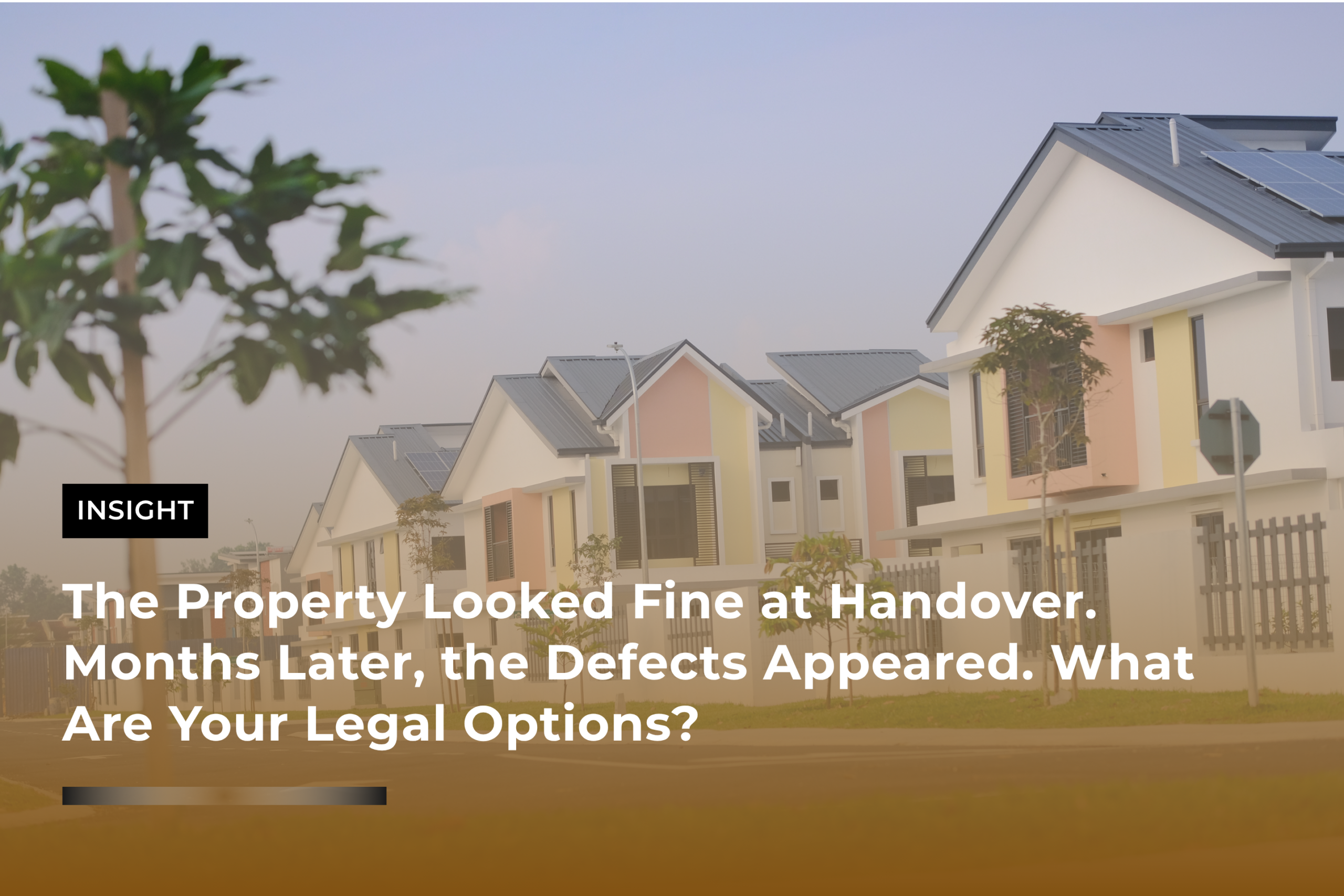
Receiving the keys to a new property is an exciting milestone. After months—or even years—of waiting, buyers naturally expect their home or investment property to be completed to the agreed standard. However, not all construction issues are immediately visible.
In many cases, defects only become apparent weeks or months after handover. Water leaks, structural cracks, electrical faults, plumbing issues, waterproofing failures, and air-conditioning problems may emerge after the property has been occupied.
When this happens, many owners are left asking an important question: Who is responsible, and what legal options are available?
This guide explains how UAE law generally addresses property defects discovered after handover, the practical steps property owners should take, and how early legal advice can help protect their interests.
What Are Latent Defects in Property?
Not all construction defects are visible during the handover inspection.
A latent defect is a hidden defect that could not reasonably have been identified during the initial inspection but becomes apparent later through normal use or over time.
Examples may include:
- Hidden water leakage
- Structural movement or cracking
- Waterproofing failures
- Defective electrical systems
- Plumbing failures inside walls
- HVAC system defects
- Poor insulation
Because these issues are concealed at the time of handover, they often require technical investigation to identify their cause.
Common Defects That Appear After Handover
Property owners commonly report issues such as:
- Water seepage and dampness
- Roof or balcony waterproofing failures
- Cracks in walls or ceilings
- Faulty electrical installations
- Plumbing leaks
- Air-conditioning system failures
- Defective flooring or tiling
- Window and door installation defects
Some problems may be cosmetic, while others can affect the safety, value, or usability of the property.
Who May Be Legally Responsible?
Determining responsibility depends on the facts of each case, the contractual arrangements, and the applicable laws.
Developers
Developers may have contractual and legal obligations relating to the quality and completion of the property.
Where defects arise, buyers should review:
- Sale and purchase agreements
- Defect liability provisions
- Warranty obligations
- Handover documentation
The scope of any responsibility depends on the specific circumstances and applicable legal framework.
Contractors and Consultants
Construction defects may sometimes result from issues relating to design, workmanship, supervision, or materials.
Depending on the circumstances, contractors, consultants, or other project participants may have legal responsibilities under construction contracts and UAE law.
Sellers and Property Owners
In secondary market transactions, the rights and obligations of buyers and sellers are governed by the sale agreement and the applicable legal principles.
Whether a seller is responsible for a defect will depend on the nature of the issue, contractual terms, and the facts of the transaction.
What Should You Do If You Discover Defects?
Document the Defects
As soon as defects are identified, gather clear evidence.
Useful documentation includes:
- Photographs
- Videos
- Inspection reports
- Handover records
- Correspondence
- Repair quotations
Evidence collected early can be extremely valuable if a dispute arises.
Notify the Relevant Party
Property owners should notify the developer, contractor, seller, or other relevant party promptly in writing.
The notification should:
- Clearly describe the defects.
- Include supporting photographs where possible.
- Request inspection and appropriate remedial action.
- Keep a record of all communications.
Prompt notification demonstrates that the issue has been raised without unnecessary delay.
Obtain an Independent Expert Assessment
Where the cause of the defect is unclear or disputed, an independent technical assessment may help determine:
- The nature of the defect
- Its likely cause
- The extent of the damage
- Recommended remedial works
Expert reports often play an important role in resolving disputes.
Explore Amicable Resolution
Many property disputes can be resolved through negotiation without formal legal proceedings.
Possible outcomes include:
- Repair works
- Financial compensation
- Agreed rectification plans
- Settlement agreements
Early discussions may preserve commercial relationships while avoiding unnecessary legal costs.
Consider Legal Action Where Necessary
If the responsible party refuses to address the defects, legal remedies may be available depending on:
- The contractual terms
- The nature of the defect
- Supporting evidence
- Applicable UAE laws
Professional legal advice is essential before commencing formal proceedings.
What Evidence Can Strengthen Your Claim?
A successful property defect claim often depends on the quality of available evidence.
Helpful documents include:
- Sale and Purchase Agreement (SPA)
- Construction contracts (where applicable)
- Handover inspection reports
- Snagging reports
- Engineer or expert reports
- Maintenance records
- Correspondence with the developer or contractor
- Photographs and videos
- Repair estimates and invoices
The stronger the documentation, the stronger the legal position.
Common Mistakes Property Owners Make
Many owners unintentionally weaken their position by:
- Delaying the reporting of defects.
- Carrying out repairs before documenting the damage.
- Relying solely on verbal complaints.
- Failing to obtain expert evidence.
- Ignoring contractual notification procedures.
- Waiting until the damage becomes more serious.
Taking prompt action often leads to better legal and practical outcomes.
Why Legal Advice Matters in Construction and Property Disputes
Property disputes frequently involve construction law, contract interpretation, technical evidence, and regulatory requirements.
An experienced legal advisor can assist by:
- Reviewing sale and construction agreements.
- Assessing legal rights and obligations.
- Coordinating with technical experts.
- Preparing formal legal notices.
- Negotiating settlements.
- Representing clients in litigation or alternative dispute resolution where required.
At Precedential Law, we advise property owners, developers, investors, contractors, and businesses across the UAE on construction disputes, property defects, contract enforcement, real estate litigation, and commercial dispute resolution. Our practical legal guidance helps clients protect their investments while achieving commercially effective outcomes.
Conclusion
Discovering hidden defects after property handover can be frustrating, but property owners are not without legal remedies. Acting quickly, preserving evidence, obtaining expert advice, and understanding your contractual and legal rights are essential steps toward resolving the issue.
Rather than allowing defects to worsen or disputes to escalate, early legal intervention can often help achieve a faster and more effective resolution.
Precedential Law provides comprehensive legal support for property owners, developers, and investors across the UAE, helping clients navigate construction disputes, property defect claims, and real estate litigation with confidence.